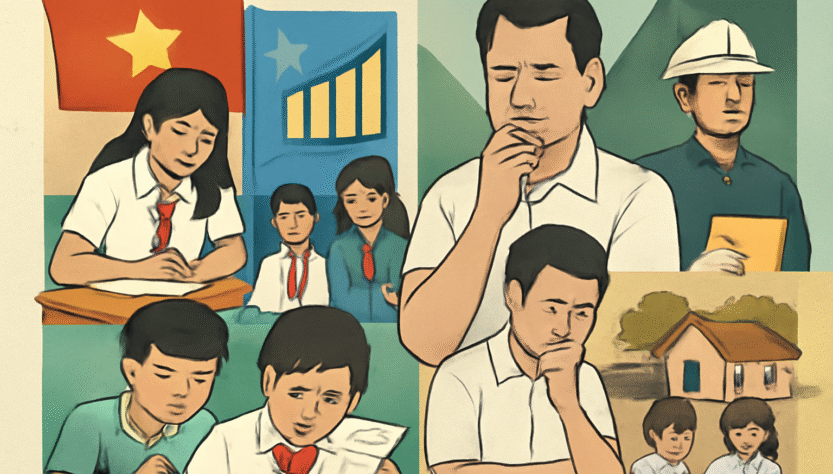
Vietnam has made tremendous strides in its educational landscape, achieving remarkable success in terms of literacy rates, academic performance, and the development of vocational education. However, the country still faces a number of challenges that must be tackled in order to continue advancing its education system.
Accomplishments
A cornerstone of Vietnam’s educational success is its literacy rate, which stands at over 94%. This accomplishment is the result of the government’s focus on ensuring that all children have access to free and compulsory education. The government’s commitment to education has had a profound impact on social development, helping lift many individuals out of poverty.
In addition to literacy, Vietnam’s students consistently outperform their peers in international educational assessments, such as the PISA tests. The country’s strong performance in subjects like mathematics, science, and reading is a testament to the effectiveness of its education system. Despite relatively lower spending on education compared to other countries, Vietnam’s rigorous educational approach has produced impressive results.
Vietnam has also placed a strong emphasis on vocational training. Recognizing the need for a skilled workforce to drive economic growth, the government has focused on developing vocational schools that offer specialized training in fields like technology, manufacturing, and healthcare. This has helped bridge the gap between education and employment, providing students with the skills needed for a competitive job market.
Challenges
However, there are still several challenges that need to be addressed. One of the most significant is the over-reliance on rote learning in schools. While this method helps students perform well on exams, it does little to develop critical thinking, creativity, or problem-solving skills. Critics argue that a shift toward more interactive and student-centered learning approaches is needed to foster the next generation of innovators and leaders.
Regional disparities in educational quality also remain a pressing issue. While urban areas have access to well-resourced schools and qualified teachers, rural areas often lack these advantages. This divide leads to unequal educational opportunities, with students in rural areas being disadvantaged by a lack of resources, access to technology, and well-trained educators.
Teacher training is another area in need of attention. While the number of teachers has increased, many still lack the necessary skills and training to implement modern teaching methods. There is a growing need for professional development programs that will help educators improve their skills and adapt to new teaching technologies and strategies.
Conclusion
Vietnam’s education system has made significant progress, particularly in terms of literacy rates, academic achievement, and vocational training. However, challenges such as rote learning, regional inequalities, and insufficient teacher training must be addressed to ensure that the system remains competitive and effective. With continued investment and reform, Vietnam has the potential to create an even stronger educational system for future generations.