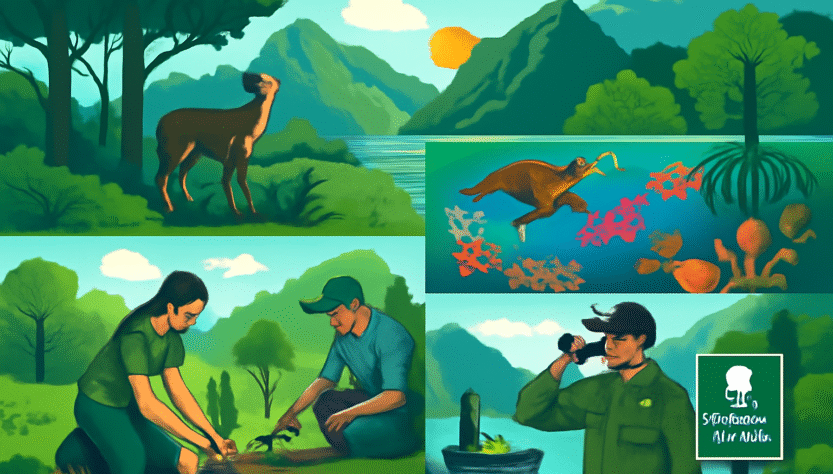
As one of the most biodiverse countries in the world, the Philippines is home to a wide variety of ecosystems, including tropical forests, mountain ranges, and marine environments. However, the rapid growth of the population and industrial activities have placed tremendous pressure on these ecosystems. To combat this, the Philippines has implemented a multi-pronged approach to conservation that involves both government action and local participation.
The National Integrated Protected Areas System (NIPAS) Law is a cornerstone of the country’s environmental conservation efforts. By protecting significant areas of land and sea, this law helps preserve the habitats of many endangered species and ensures that critical ecosystems are safeguarded. The Tubbataha Reefs Natural Park, a UNESCO World Heritage Site, is one such example of a marine protected area that plays a key role in conserving the Philippines’ marine biodiversity.
Reforestation efforts are also a key part of the Philippines’ conservation strategy. The National Greening Program (NGP), launched by the government in 2011, has focused on reforesting degraded lands and restoring critical watersheds. By planting millions of trees in deforested areas, the program helps to mitigate soil erosion, prevent flooding, and protect biodiversity. Local communities are actively involved in these reforestation efforts, ensuring that the program is sustainable and that the benefits of restored ecosystems are felt at the community level.
Marine conservation is also a major focus in the Philippines. The country’s waters are home to some of the most biodiverse marine ecosystems in the world, yet these ecosystems are under threat from overfishing and illegal fishing practices. In response, the Philippines has established marine protected areas (MPAs) along its coastlines to protect coral reefs and other important marine habitats. These MPAs are critical for preserving biodiversity and supporting the livelihoods of coastal communities that rely on fishing.
Despite these initiatives, the Philippines faces significant challenges in environmental protection. Illegal logging, mining, and fishing continue to threaten ecosystems, while climate change exacerbates the vulnerability of the country’s natural resources. However, through continued government action, public awareness campaigns, and community-based conservation programs, the Philippines is striving to preserve its natural heritage for future generations.