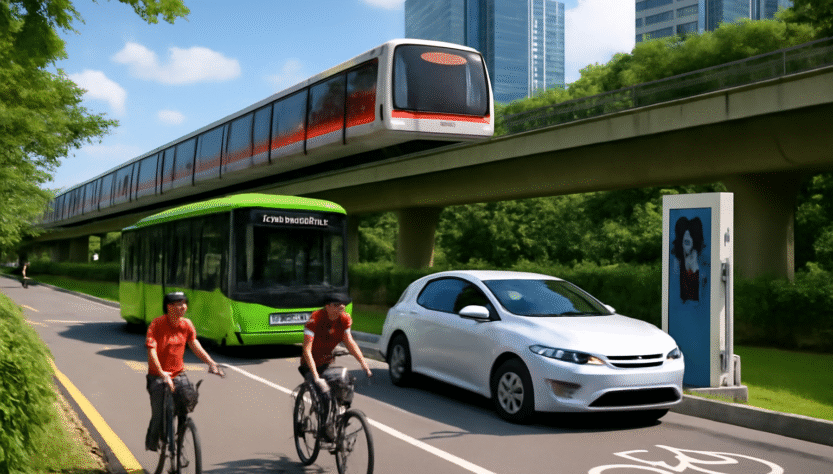
Singapore’s transportation system is renowned for its efficiency, sustainability, and innovation. The city-state has built an integrated transport network that caters to the growing needs of its residents while reducing its environmental impact. From the Mass Rapid Transit (MRT) system to the increasing adoption of electric buses, Singapore is leading the way in sustainable urban mobility.
The MRT network is the backbone of Singapore’s public transport system. It serves millions of commuters daily, offering fast, reliable, and efficient service. With a network that spans across the island, the MRT ensures that Singaporeans can travel easily and efficiently. The system is complemented by an extensive bus network that ensures even the most remote areas are accessible via public transport, creating a well-rounded and integrated mobility solution.
Sustainability is central to Singapore’s transportation policies. The government has set ambitious targets for reducing carbon emissions and promoting greener forms of transport. One of the most significant steps is the push for electric vehicles (EVs). By 2040, the government plans to eliminate the sale of petrol and diesel vehicles, replacing them with electric cars. To support this transition, the city is expanding its EV charging network and offering incentives to residents to encourage EV adoption.
Electric buses are another key component of Singapore’s sustainable transport strategy. The country has already begun transitioning its bus fleet to electric vehicles, with the aim of having a fully electric public bus fleet by 2040. These buses are more energy-efficient and produce zero emissions, making them an essential part of Singapore’s effort to reduce pollution and combat climate change.
The city has also implemented the Electronic Road Pricing (ERP) system, a congestion management tool that charges drivers for using certain roads during peak hours. By dynamically adjusting the prices based on traffic conditions, ERP helps to manage congestion, encourage the use of public transport, and reduce the need for expansive road infrastructure.
Lastly, Singapore encourages cycling and walking as sustainable transport options. The city has invested in creating dedicated cycling paths and pedestrian-friendly areas, making it safer and more convenient for residents to use alternative modes of transport for short trips. These efforts are part of Singapore’s larger goal to reduce car dependency and create a more sustainable urban environment.
In conclusion, Singapore’s transportation system offers a comprehensive model of how cities can achieve efficiency and sustainability. Through innovations like electric buses, road pricing systems, and the promotion of greener mobility options, Singapore is setting the standard for sustainable urban transportation.