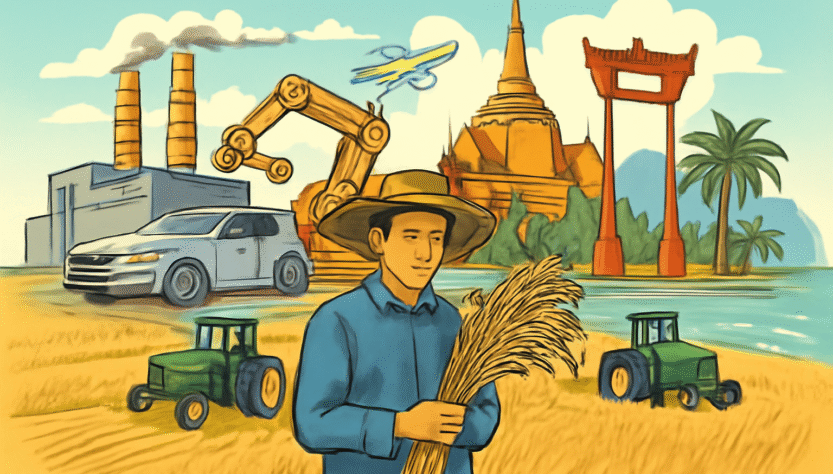
Thailand’s economy is driven by the interconnected growth of three essential sectors: agriculture, industry, and tourism. These sectors not only support each other but also form the backbone of the country’s economic development. As Thailand continues to modernize, these sectors play a key role in creating jobs, enhancing productivity, and positioning the country as a global economic player.
Agriculture: The Lifeblood of Thailand’s Economy
Agriculture is a critical component of Thailand’s economy, with the sector contributing a large portion to the country’s GDP and providing livelihoods to millions of rural workers. Thailand is a leading global producer of rice, rubber, cassava, and tropical fruits, which are vital exports to international markets. Rice, in particular, remains the country’s most important agricultural product.
Despite the shift toward industrialization, agriculture remains vital for food security, rural employment, and economic stability. The Thai government has introduced programs aimed at modernizing farming techniques, improving water management, and increasing sustainable agricultural practices to ensure long-term productivity.
Industrial Development and Technological Advancements
Thailand’s industrial sector has undergone significant transformation, moving from agriculture-based to manufacturing-based growth. Key industries such as automotive manufacturing, electronics, petrochemicals, and food processing have fueled this transition. Thailand has become a major production hub for automobiles in Southeast Asia, and its electronics industry produces a wide range of components used in global supply chains.
The “Thailand 4.0” initiative aims to boost the country’s industrial capacity by focusing on high-tech industries like robotics, digital technology, and biotechnology. These efforts aim to move Thailand away from traditional manufacturing and toward more innovative, value-added production processes. This shift is expected to create high-paying jobs, attract foreign investment, and increase the country’s global competitiveness.
The Economic Role of Tourism
Tourism is one of Thailand’s most important industries, contributing to both GDP and employment. With its unique culture, stunning landscapes, and vibrant cities, Thailand continues to attract millions of international visitors each year. The tourism sector spans luxury resorts, adventure tourism, eco-tourism, and medical tourism, catering to a wide variety of travelers.
The tourism sector supports millions of jobs in hospitality, transportation, and retail. In 2019, over 39 million tourists visited Thailand, providing substantial revenue and spurring growth in related industries. The Thai government continues to invest in the development of new tourist attractions, infrastructure, and marketing campaigns to maintain Thailand’s competitive edge in the global tourism market.
Conclusion
Thailand’s economy benefits from the harmonious growth of agriculture, industry, and tourism. Agriculture continues to provide resources and employment, while industry drives innovation and competitiveness. Tourism, meanwhile, remains a major economic engine, attracting global visitors and generating substantial revenue. Together, these three sectors help maintain Thailand’s position as one of Southeast Asia’s most robust and dynamic economies.