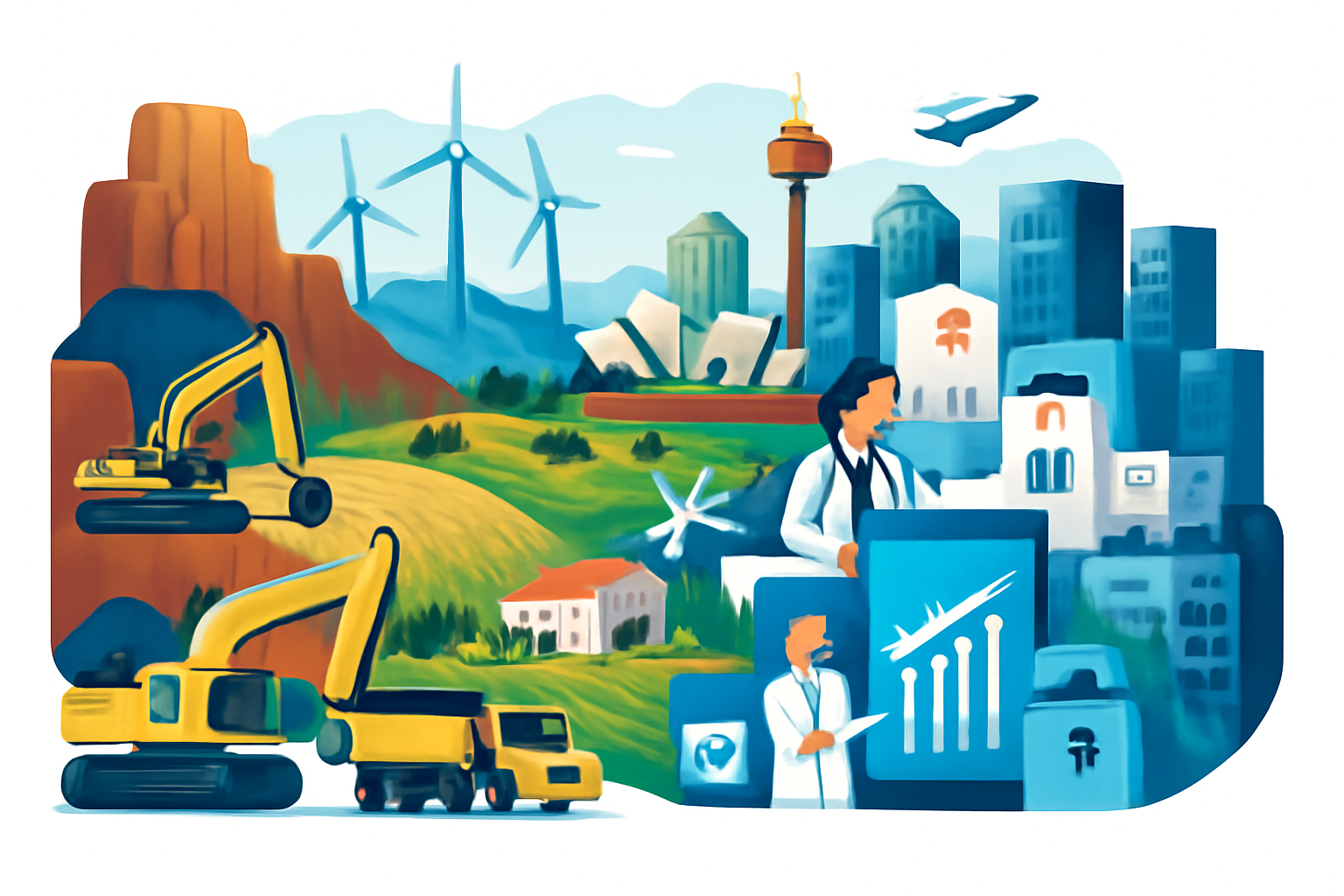
Australia’s economic potential is powered by a mix of rich natural resources, thriving industries, and a rapidly advancing digital economy. These sectors complement one another, creating a dynamic and resilient economic landscape that ensures Australia’s competitiveness on the global stage.
Natural Resources: The Backbone of Australia’s Economy
Australia’s wealth of natural resources is a key driver of its economic prosperity. The country is one of the world’s leading producers and exporters of minerals such as coal, iron ore, gold, and natural gas. These resources are vital for global industries, particularly in Asia, where they fuel construction, energy, and manufacturing.
The mining sector provides significant employment opportunities across the country, particularly in regional areas. Innovations in mining technology, such as automation and digital resource management, have helped improve efficiency and reduce environmental impact, ensuring the long-term viability of Australia’s mining operations.
Australia’s agricultural sector is also a major economic contributor. The country is known for producing high-quality agricultural products, including beef, wheat, and wool. Australian farmers are leveraging advanced farming techniques and sustainable practices to maintain global competitiveness and meet the growing demand for food and resources.
In response to the global shift toward clean energy, Australia is increasingly investing in renewable energy. With abundant solar and wind resources, the country is well-positioned to become a leader in the global renewable energy market, contributing to a low-carbon future.
Industrial Growth: Diversification and Innovation
Australia’s industrial landscape is evolving, with a growing focus on diversification and innovation. While the mining and agricultural sectors remain important, the service sector has become the largest contributor to GDP, driven by industries such as finance, healthcare, and education.
Australia has developed into a regional financial hub, with Sydney and Melbourne serving as key centers for banking and investment. The country’s well-regulated financial system supports business growth and attracts international investors, enhancing Australia’s position in global finance.
The tourism industry also plays a vital role in the Australian economy. The country’s world-renowned landmarks and natural beauty attract millions of international tourists each year. Tourism supports a wide range of industries, including hospitality, transport, and entertainment.
In the manufacturing sector, Australia is shifting toward high-tech industries, such as biotechnology, medical devices, and advanced materials. This shift reflects the country’s commitment to innovation and technological advancement, ensuring that its manufacturing sector remains competitive in a rapidly changing global market.
Healthcare is another sector with significant growth potential. Australia’s healthcare system is among the best in the world, providing quality services through both public and private channels. As the population ages, demand for healthcare services will continue to grow, providing new opportunities for investment and development.
Digital Economy: Transforming the Future
Australia’s digital economy is rapidly expanding, fueled by advances in technology that are reshaping business and consumer behavior. E-commerce, fintech, and digital services are driving economic growth, while also transforming how Australians live and work.
Fintech is one of the most promising sectors in Australia’s digital economy. The country is a leader in digital payments, online banking, and blockchain technology. The fintech industry benefits from a supportive regulatory environment that encourages innovation while ensuring consumer protection and financial stability.
As Australia becomes more digitally connected, cybersecurity is becoming increasingly important. With growing concerns about data breaches and cyber-attacks, both the government and private sector are investing in measures to strengthen Australia’s cybersecurity infrastructure.
Australia is also embracing digital technologies in public services, education, and healthcare. E-government initiatives are making public services more accessible, while digital platforms are transforming the way education and healthcare are delivered, improving accessibility for remote and underserved communities.
In embracing digital transformation alongside its traditional industries, Australia is preparing for long-term economic growth and continued global competitiveness.