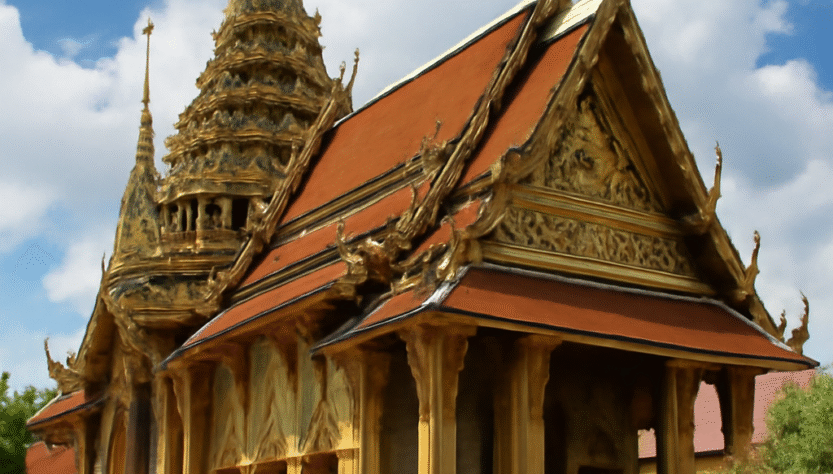
The architectural design of Thai temples, known as wats, is deeply intertwined with the spiritual and artistic traditions of Thailand. These temples serve as more than just places of worship; they are reflections of Buddhist teachings, capturing the sacred geometry and divine symbolism that permeates Thai culture. With their majestic spires, serene halls, and intricate artwork, Thai temples are a testament to the country’s reverence for both beauty and spirituality.
A prominent feature of Thai temples is the prang, a tall, spire-like structure that reaches towards the sky. The prang represents Mount Meru, which in Buddhist cosmology is the axis of the universe, and its towering height symbolizes the journey toward enlightenment. The prang is often decorated with detailed carvings, colorful mosaics, and gold leaf, creating an otherworldly aura that draws the worshipper’s gaze upward and inspires reflection on the divine.
The vihara, or main hall, is the heart of the temple, where worshippers gather for ceremonies, meditation, and reflection. The interior of the vihara is typically adorned with large Buddha statues, each symbolizing different stages in the Buddha’s life or various aspects of his teachings. These statues serve as focal points for meditation, guiding worshippers to reflect on the Buddha’s wisdom and their own path to enlightenment. The walls are often covered with murals depicting scenes from the Buddha’s life and teachings, offering worshippers a visual representation of key Buddhist concepts.
The roofs of Thai temples are designed with multiple tiers that curve upward, symbolizing the lotus flower, a symbol of purity and spiritual awakening in Buddhism. The roof design also serves a practical purpose by directing rainwater away from the temple’s foundation, protecting the structure. The roofs are often adorned with gold and intricate carvings, further enhancing the temple’s spiritual ambiance.
Gold plays a significant role in Thai temple architecture, representing divine purity, enlightenment, and the presence of the Buddha. Gold leaf is often applied to statues and architectural elements, creating a glowing, radiant effect that highlights the sacred nature of the space. This use of gold invites worshippers to engage with the temple and its divine presence through acts of reverence and devotion.
The temple grounds themselves are designed to provide a peaceful and serene environment for reflection and meditation. Many temples feature lush gardens, lotus ponds, and tranquil courtyards, allowing worshippers to connect with nature and experience the Buddhist ideal of harmony between the natural world and the spiritual realm.
Thai temples are not just architectural feats; they are living symbols of the country’s Buddhist heritage. Through their design and construction, these temples continue to inspire awe and devotion, offering a space for both worship and personal spiritual growth.