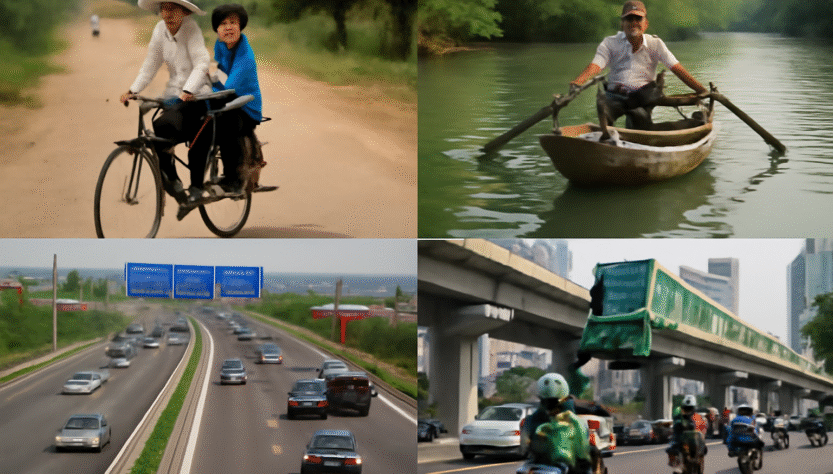
Vietnam’s transportation system has undergone tremendous growth and development over the past few decades, evolving from a country with limited roads and minimal infrastructure to one with a modern transportation network that supports its booming economy and urbanization. This evolution reflects the nation’s focus on improving connectivity, mobility, and sustainability, as well as its increasing role in global trade.
Historically, transportation in Vietnam was largely dependent on non-motorized forms of transport. In rural areas, waterways were the primary means of transportation, while bicycles and pedicabs were the most common modes of transport in cities. However, the limited infrastructure in place could not handle the rising demands of a rapidly growing population, which prompted the need for significant investments in road networks and public transit.
The Doi Moi reforms of the 1980s were pivotal in shifting the country’s focus toward modernizing its transportation infrastructure. With the country opening up to the global market and experiencing significant economic growth, the demand for efficient transportation systems grew. By the 1990s, motorbikes became the dominant mode of transport, offering affordable and flexible solutions to navigating crowded urban streets.
As Vietnam’s cities expanded, so did the need for larger-scale infrastructure. The government invested heavily in roadways, highways, and intercity expressways to facilitate better movement of goods and people. The creation of the North-South Expressway, for example, helped reduce travel times between major urban centers and promoted regional integration.
The introduction of mass transit in the 2000s marked another significant milestone in Vietnam’s transportation development. The opening of the Hanoi Metro in 2021 was a major step forward in creating more sustainable urban mobility solutions. The metro is designed to reduce congestion, improve air quality, and provide an affordable and reliable public transport option. Ho Chi Minh City is also making strides with plans for its own metro system, which will further enhance urban mobility.
Technology has played a significant role in transforming transportation in Vietnam. Ride-hailing services like Grab have made it easier for people to access transportation in cities, offering a convenient alternative to traditional taxis and reducing the reliance on private cars. This technological shift has helped alleviate traffic congestion and offered people a wider variety of transport options.
Looking ahead, Vietnam’s transportation network will continue to grow and modernize, with a focus on sustainability. Plans for electric vehicles, improved public transit, and better logistics networks will be central to addressing the challenges posed by rapid urbanization and population growth.