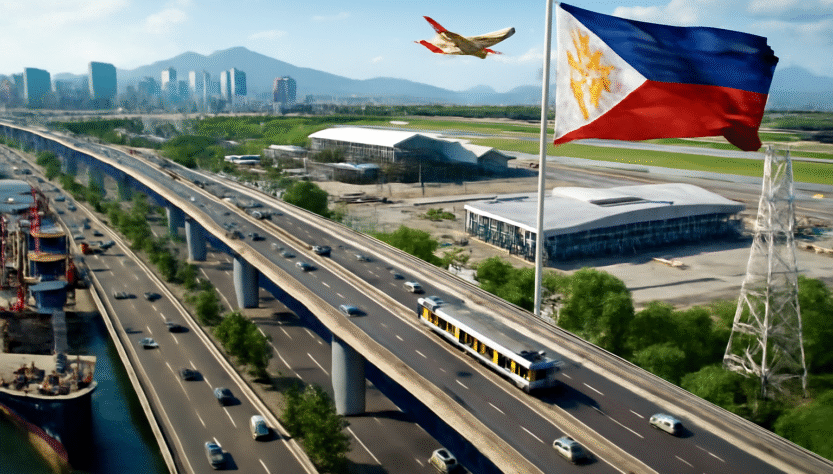
The Philippines, an archipelago of over 7,000 islands, faces a unique set of challenges when it comes to developing infrastructure. Despite these challenges, the Philippine government has made significant strides in enhancing national connectivity and mobility through a range of large-scale infrastructure projects. These initiatives, particularly under the Build, Build, Build program, are designed to improve the country’s transportation systems, fostering economic development and improving the quality of life for its citizens.
One of the primary focuses of infrastructure development in the Philippines is the road network. Traffic congestion in Metro Manila has been a persistent problem, hindering economic productivity and impacting daily life. To alleviate this, the government has focused on expanding and modernizing expressways, highways, and bridges to facilitate smoother movement of people and goods. Projects such as the Skyway Stage 3 have improved travel times between key areas in Metro Manila, benefiting both commuters and businesses.
Airports and seaports are also critical to the country’s connectivity and mobility. Major airports like Ninoy Aquino International Airport (NAIA) have undergone significant renovations to accommodate increasing passenger demand. Regional airports in places such as Cebu and Davao are also receiving upgrades, promoting easier travel between islands and boosting domestic tourism. On the maritime front, the Philippines has invested in the development and expansion of key seaports, including those in Batangas, Cebu, and Davao. These improvements will increase the capacity of ports to handle larger vessels and support growing trade and commerce.
The government is also making significant investments in rail infrastructure to address the growing demand for public transportation. The Metro Manila Subway, a major project currently under construction, is expected to ease traffic congestion by providing an efficient and rapid transit system for millions of commuters. Furthermore, the North-South Commuter Railway, which will connect Metro Manila with nearby provinces, will provide an alternative to the crowded roads, reducing travel times and promoting more sustainable transport.
Beyond transportation, the Philippine government is also focusing on improving energy and telecommunications infrastructure. A stable energy supply is essential for maintaining the smooth operation of transportation systems, while expanding internet connectivity allows businesses and individuals to access services more effectively. This digital infrastructure will help bridge the gap between rural and urban areas, ensuring that all Filipinos have access to essential information and services.
While there are still challenges to overcome, including the persistence of traffic congestion and vulnerability to natural disasters, the Philippines’ infrastructure initiatives are poised to significantly enhance national connectivity and mobility. These projects will not only improve transportation efficiency but also create new opportunities for business, tourism, and social development.