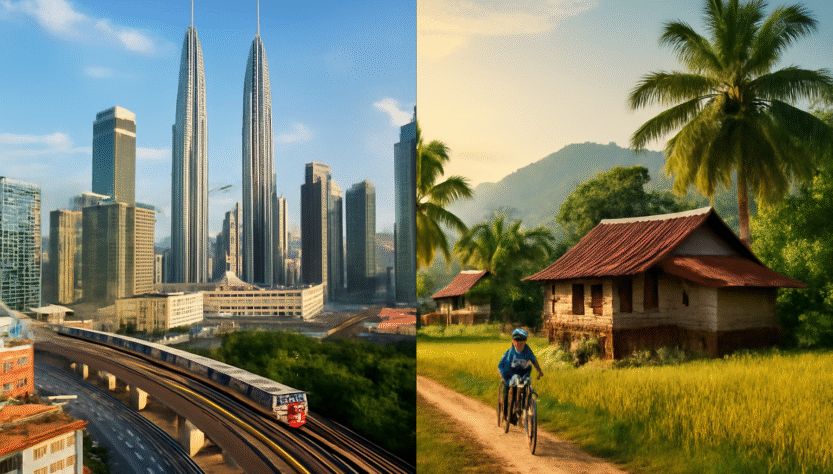
In Malaysia, urban and rural living present dramatically different lifestyles. The fast-paced, high-tech city life contrasts sharply with the slower, more nature-focused existence in rural areas. Both lifestyles come with unique advantages, obstacles, and opportunities. This article explores the primary differences between city and rural living, while also examining the opportunities and challenges each offers.
Life in the Cities: Convenient, Fast-paced, and Expensive
Urban centers in Malaysia, like Kuala Lumpur, Penang, and Johor Bahru, offer a high-energy, modern lifestyle with all the amenities of a developed nation. The availability of high-quality healthcare, education, and infrastructure makes city living highly attractive to professionals and families alike. Urban areas also boast a wide variety of employment opportunities in industries such as finance, technology, healthcare, and retail. The vibrant social scene, bustling markets, and cultural events make cities exciting places to live.
However, the cost of living in urban Malaysia is a major concern. Property prices, particularly in the larger cities, are rising rapidly, making homeownership increasingly difficult for younger generations. The cost of everyday necessities, such as groceries, transportation, and entertainment, is also higher compared to rural areas. In addition, cities are plagued by overcrowding, traffic congestion, and pollution, all of which can negatively impact the quality of life.
Rural Living: Peaceful, Close to Nature, but with Limited Resources
On the other hand, rural Malaysia offers a quieter, slower-paced lifestyle, with a stronger connection to nature. In areas like Pahang, Sabah, and Perak, the rural lifestyle revolves around agriculture, fishing, and local trade. Many people in rural areas enjoy a close-knit sense of community, with strong family ties and a slower, more relaxed way of life.
However, living in rural areas is not without its challenges. While the cost of living is significantly lower than in cities, access to essential services like healthcare and education can be limited. In many rural regions, basic infrastructure like paved roads, reliable electricity, and internet services may be lacking, making life more difficult for residents. Employment opportunities are also fewer in rural areas, with most jobs centered around agriculture and local small businesses.
Overcoming the Struggles of Urban and Rural Living
Urban living in Malaysia is often associated with high living costs, traffic congestion, and environmental pollution. Although cities offer a wealth of services and job opportunities, they also present challenges related to affordability, overcrowding, and air quality. As cities continue to expand, these problems are likely to worsen unless addressed through urban planning and sustainable development efforts.
In contrast, rural areas face challenges related to infrastructure and limited job opportunities. The lack of modern facilities and services can hinder the quality of life for rural residents. Furthermore, the limited access to education and healthcare can make it difficult for people to improve their living standards without migrating to urban centers.
Opportunities for Growth in Both Spheres
Cities offer many opportunities for career development, entrepreneurship, and access to professional networks. Major urban centers are hubs for global companies and offer exciting job prospects across various industries. For entrepreneurs, the abundance of resources, funding options, and access to a diverse market makes cities an attractive place to start a business.
Meanwhile, rural areas offer opportunities in agriculture, eco-tourism, and local crafts. Malaysia’s natural beauty and agricultural richness provide a foundation for growth in sustainable industries. The government’s rural development initiatives also help improve infrastructure and living conditions, creating new prospects for rural residents.
Each environment, whether urban or rural, has its own set of unique advantages and challenges. Understanding these differences helps individuals make informed decisions about where to live based on their values, needs, and career ambitions.