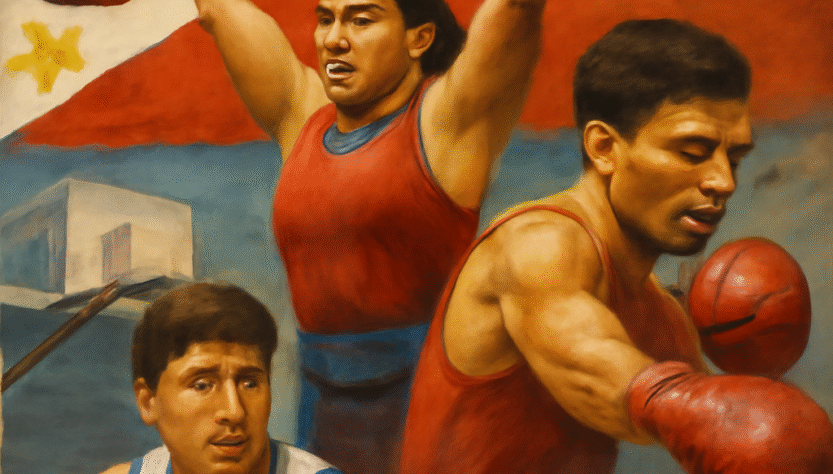
Filipino athletes have made their mark on the international sports scene, with numerous accomplishments that showcase the country’s athletic talent. From Olympic gold medals to world championship titles in boxing, Filipino athletes continue to shine despite facing significant challenges such as a lack of resources, inadequate infrastructure, and limited financial support.
The Philippines’ most significant achievement in recent years came at the 2020 Tokyo Olympics, when Hidilyn Diaz won the nation’s first-ever gold medal in weightlifting. Diaz’s victory was not only a personal triumph but also a historic moment for the country, illustrating the potential of Filipino athletes to succeed on the world stage. Her success was the result of years of dedication and hard work, despite facing financial and logistical challenges. Diaz’s achievement sparked a renewed focus on sports development in the Philippines and served as an inspiration for many aspiring athletes.
In the world of boxing, the Philippines has long been recognized for producing world-class athletes. Manny Pacquiao, widely regarded as one of the greatest boxers of all time, has been instrumental in putting the Philippines on the global sports map. Pacquiao’s remarkable career, which includes numerous world titles across multiple weight classes, has inspired countless Filipinos to pursue boxing. Other boxers, such as Nonito Donaire and Nesthy Petecio, have also contributed to the country’s boxing legacy, winning world championships and solidifying the Philippines as a boxing powerhouse.
Basketball remains the most popular sport in the Philippines, with the national team, Gilas Pilipinas, regularly competing in international tournaments like the FIBA Asia Cup. The Philippine Basketball Association (PBA) continues to thrive as one of Asia’s premier professional basketball leagues. The Philippines has produced many talented basketball players who have gone on to play for international teams or represent the country in global competitions.
Despite these successes, Filipino athletes still face considerable obstacles. One of the main challenges is the lack of proper training facilities and infrastructure. While sports like boxing and basketball have received substantial attention, athletes in other disciplines, such as athletics, swimming, and tennis, often train in subpar conditions, limiting their potential. Access to modern facilities, coaching, and equipment is crucial for athletes to compete on the same level as those from better-funded nations.
Another issue is the lack of financial support for Filipino athletes, particularly those in less mainstream sports. While some sports, such as boxing and basketball, attract significant sponsorships, many athletes in other disciplines struggle to secure the funding necessary for training, travel, and competition. This financial barrier prevents many talented athletes from fully realizing their potential and limits their opportunities for international exposure.
Moreover, the sports development system in the Philippines requires further investment. Although there is a wealth of untapped talent, many athletes, especially those from rural areas, lack access to proper training programs and coaching. Strengthening the country’s sports development programs, from grassroots initiatives to elite athlete support, will be key to ensuring that more Filipino athletes have the opportunity to succeed on the world stage.
Despite these challenges, the future looks bright for Filipino athletes. With continued investment in sports infrastructure, improved financial support, and a more comprehensive sports development strategy, the Philippines has the potential to continue producing world-class athletes and achieving greater success in global competitions.