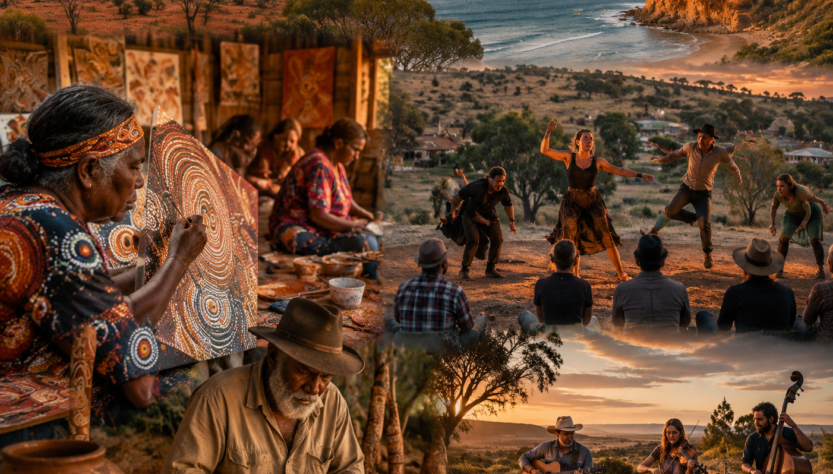
Arts education in Australia plays a crucial role in shaping the country’s creative industries and cultural identity. From primary schools to universities and specialized art academies, structured learning environments help cultivate future artists, performers, and cultural leaders.
At the foundational level, Australian schools integrate visual arts, drama, and music into their curricula. These programs are designed not only to develop technical skills but also to encourage creativity, critical thinking, and cultural awareness. Students are introduced to both Western artistic traditions and Indigenous cultural practices, fostering a broader understanding of Australia’s heritage.
At the tertiary level, institutions such as the National Art School in Sydney, RMIT University in Melbourne, and the University of Melbourne’s Faculty of Fine Arts and Music provide professional training in disciplines ranging from painting and sculpture to film production and sound design. These institutions often collaborate with industry partners, ensuring students gain real-world experience.
Museums and galleries also function as informal educational spaces. The National Gallery of Australia and state galleries regularly host exhibitions, workshops, and public lectures. These programs help bridge the gap between academic study and public engagement, making art accessible to wider audiences.
Government support is another key factor. Funding bodies such as Creative Australia provide grants for emerging artists, research projects, and community arts initiatives. This support system helps sustain artistic development even in smaller or regional communities.
However, arts education faces ongoing challenges, particularly regarding funding cuts and the perception that creative careers are less economically stable. Despite this, Australia continues to maintain a strong infrastructure for arts learning, which directly contributes to its vibrant cultural scene.