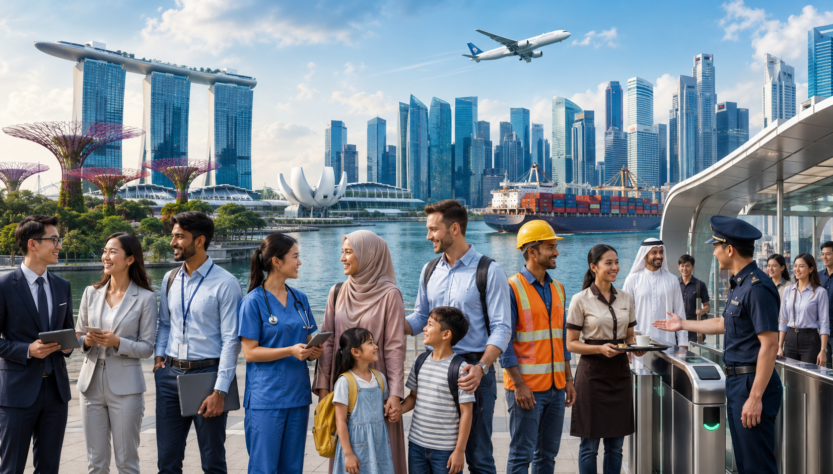
Singapore’s immigration policy is deeply connected to its demographic realities. The country faces long-term challenges such as low birth rates, an ageing population, and limited land availability. To address these pressures, immigration is used as a controlled mechanism for population management and workforce renewal, ensuring that economic development remains stable and sustainable.
A key function of immigration in Singapore is to supplement the local workforce. As the resident population ages, the proportion of working-age citizens decreases, creating pressure on industries that require continuous labor supply. Foreign professionals and skilled workers help fill this gap, especially in sectors like healthcare, finance, engineering, digital technology, and education. These individuals contribute not only to productivity but also to innovation and knowledge transfer.
Singapore’s immigration system is highly selective and structured. Different categories of work passes are used to regulate the type and number of foreign workers entering the country. High-skilled individuals are assessed through salary thresholds, academic qualifications, and professional experience. Mid-skilled and lower-skilled workers are subject to quotas and employer levies, ensuring that their presence aligns with economic demand rather than unrestricted inflow.
In addition to workforce considerations, immigration plays a role in population renewal. By allowing controlled entry of younger foreign residents, Singapore helps balance its ageing demographic structure. This contributes to sustaining public services, healthcare systems, and pension frameworks. However, population growth is carefully managed to prevent strain on housing, transportation, and infrastructure.
Social integration is another major pillar of the immigration system. Singapore’s diverse society is built on the principle of multicultural coexistence, where different ethnic and religious groups live together under a shared national identity. New immigrants are expected to adapt to this framework by respecting local laws, social norms, and civic responsibilities. Integration is supported through education, workplace interaction, and community engagement programs.
Permanent residency and citizenship are granted based on a holistic evaluation process. Authorities consider economic contribution, educational background, duration of stay, family ties, and the ability to integrate into Singaporean society. This ensures that long-term residents are aligned with national interests and values.
Public sentiment also plays an important role in shaping immigration policy. Concerns about job competition, wage pressure, and housing affordability are taken seriously by policymakers. As a result, immigration policy is regularly reviewed and adjusted to maintain public trust and social stability.
Singapore’s approach reflects a delicate balance between openness and control. Immigration is used to strengthen the population base and support economic vitality, while strict regulations ensure that growth remains manageable and socially sustainable.