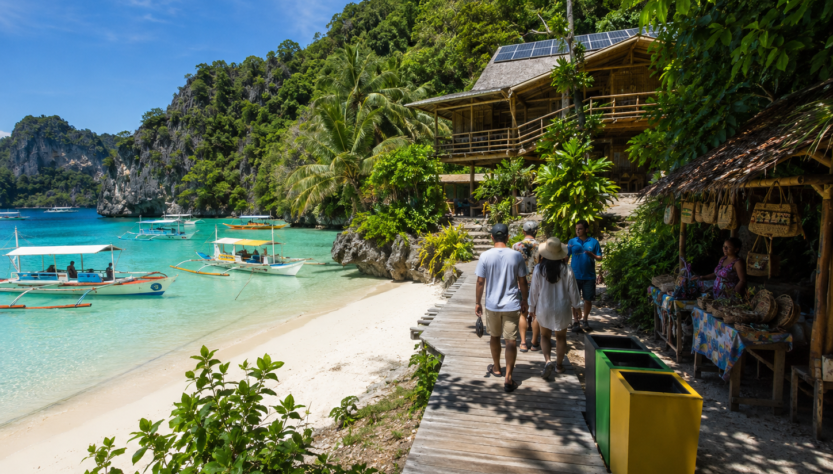
The Philippines has always been recognized as a global tourism destination because of its spectacular natural landscapes, diverse marine ecosystems and rich cultural traditions. From the white beaches of Boracay to the limestone formations of Palawan and the surfing communities of Siargao, tourism continues to play a significant role in the country’s economic development.
However, increasing tourism activity has also created pressure on natural resources and local communities. Overcrowding, waste generation, water consumption and ecosystem damage have become major concerns in several popular destinations.
As a response, the Philippines is increasingly focusing on sustainable tourism strategies that combine economic opportunities with environmental protection and social responsibility.
The goal is to create destinations where tourism growth does not reduce environmental quality but instead supports conservation and community development.
Eco-Tourism Becomes a Key Strategy for Destination Protection
Ecotourism has become one of the most important approaches in sustainable tourism development across the Philippines.
Unlike traditional mass tourism models that often prioritize high visitor numbers, ecotourism emphasizes low-impact experiences, environmental education and conservation support.
Protected areas such as marine sanctuaries, national parks and biodiversity zones are increasingly being promoted as destinations where visitors can experience nature while contributing to preservation efforts.
The Philippine Biodiversity Conservation Foundation and government environmental agencies continue to support conservation programs aimed at protecting the country’s unique ecosystems.
More information regarding biodiversity conservation initiatives is available through the Department of Environment and Natural Resources:
https://www.denr.gov.ph/
These conservation efforts are important because many tourism activities depend directly on healthy ecosystems. Coral reefs support diving industries, forests attract adventure travelers and clean coastal environments maintain beach tourism.
Learning From Destination Challenges
Several Philippine destinations have experienced difficulties caused by rapid tourism expansion.
Boracay’s temporary closure in 2018 became a major example of why sustainable planning is necessary. Before rehabilitation, the island faced serious environmental concerns related to wastewater management, overcrowding and infrastructure limitations.
The recovery process introduced stricter environmental requirements and stronger tourism regulation.
The experience provided valuable lessons for other destinations experiencing rapid growth. Tourism promotion must be matched with proper infrastructure, environmental monitoring and responsible business practices.
Without effective planning, popular destinations may experience declining quality and eventually lose their attractiveness to visitors.
Supporting Local Communities Through Sustainable Tourism
A successful sustainable tourism model must include local residents as active participants.
Many rural and island communities in the Philippines depend on tourism-related income. Sustainable tourism provides opportunities for local entrepreneurs, including homestay operators, local guides, food producers and cultural performers.
Community involvement also improves conservation outcomes because residents who benefit from tourism are more likely to protect natural resources.
For example, community-managed marine protected areas demonstrate how local participation can help preserve fisheries while supporting tourism activities such as snorkeling and diving.
This approach creates a connection between environmental protection and economic improvement.
Climate Change and Tourism Resilience
Climate change has become another major factor influencing tourism planning in the Philippines.
As an archipelagic nation, the country is highly vulnerable to typhoons, coastal erosion and rising sea levels.
Tourism destinations must now consider climate resilience when developing infrastructure.
Building stronger facilities, protecting mangrove ecosystems and improving disaster preparedness are becoming essential parts of sustainable tourism management.
The World Bank provides climate risk information and analysis for the Philippines:
https://climateknowledgeportal.worldbank.org/country/philippines
This data helps policymakers and businesses understand climate-related risks that may affect future tourism development.
Creating a More Responsible Tourism Identity
The future of Philippine tourism depends on moving from a volume-based approach toward a value-based approach.
Instead of focusing only on attracting more visitors, destinations need to focus on creating meaningful experiences while protecting their environmental and cultural assets.
Sustainable tourism allows the Philippines to maintain its global tourism appeal while ensuring local communities and ecosystems remain protected.
By investing in conservation, responsible travel practices and community participation, the country can develop a tourism industry that remains competitive and resilient for decades to come.