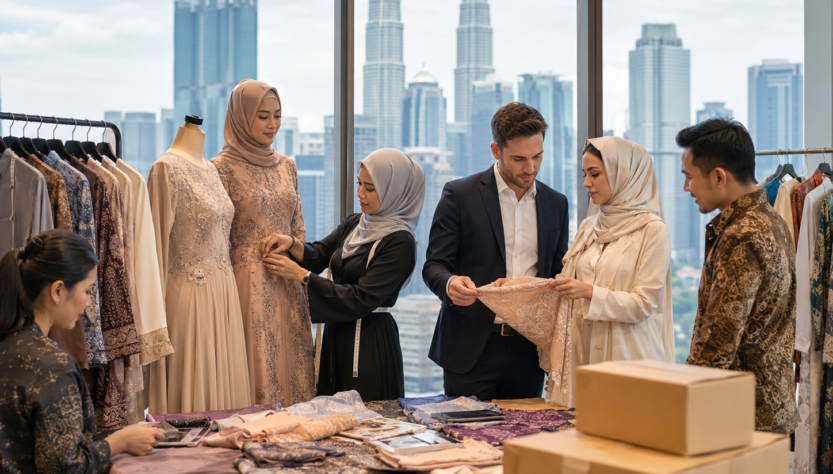
The path from Kuala Lumpur to international markets no longer runs only through physical trade shows and department stores. Malaysian fashion brands are adopting a digital-first export playbook that combines social commerce, cross-border e-commerce platforms, and government-backed trade missions to reach buyers on multiple continents.
From Physical Boutiques to Digital Storefronts
Many Malaysian labels began as brick-and-mortar ateliers serving local customers. Today, those same designers operate storefronts on Zalora, Shopee, and their own websites, shipping to customers in Singapore, Brunei, the UAE, and beyond. The shift has been accelerated by consumer habits formed during the pandemic and by the lower cost of digital customer acquisition compared to opening overseas retail outlets. For small labels, an Instagram shop plus a Zalora presence can generate more international sales than a single pop-up in a foreign mall.
Social Commerce and Cross-Border Payments
TikTok Shop has become a surprisingly effective channel for Malaysian occasion wear. Short videos showing the movement of songket fabric or the beading process attract viewers from the Gulf and Southeast Asia who then complete purchases without leaving the app. Platform-managed logistics and currency conversion remove many of the friction points that once made cross-border selling difficult. Designers can test new styles through limited drops, gather real-time feedback, and scale only what sells. This data-driven approach reduces inventory risk and improves cash flow.
MATRADE’s Market Access Programs
The Malaysian government has been actively supporting digital export adoption. MATRADE’s Market Development Grant reimburses eligible SMEs for costs related to participating in virtual trade missions, international e-commerce onboarding, and overseas digital marketing. The grant details are outlined here: https://www.matrade.gov.my/en/. By covering a portion of these expenses, MATRADE allows young brands to experiment with international sales without risking their entire working capital.
Case Studies: Fiziwoo and Mimpikita’s Online Expansion
Fiziwoo uses its online store to reach Middle Eastern clients who discover the brand through Instagram and Pinterest. The label offers video consultations and ships made-to-order pieces to Dubai and Riyadh. Mimpikita has taken a broader approach, listing ready-to-wear items on multiple regional e-commerce platforms while maintaining its own direct-to-consumer site. Both brands report that international online orders now account for a meaningful share of total revenue. Their success shows that Malaysian design can travel well when supported by solid digital operations.
Overcoming Logistics and Returns Friction
Cross-border fashion retail still faces challenges, including returns management, sizing discrepancies, and customs delays. Malaysian brands are addressing these by offering detailed size charts, virtual fitting sessions, and flexible return policies for ready-to-wear items. Some designers partner with regional fulfilment centers to reduce delivery times and costs. As these infrastructure gaps close, digital export will become an even more viable growth channel for the country’s fashion sector.