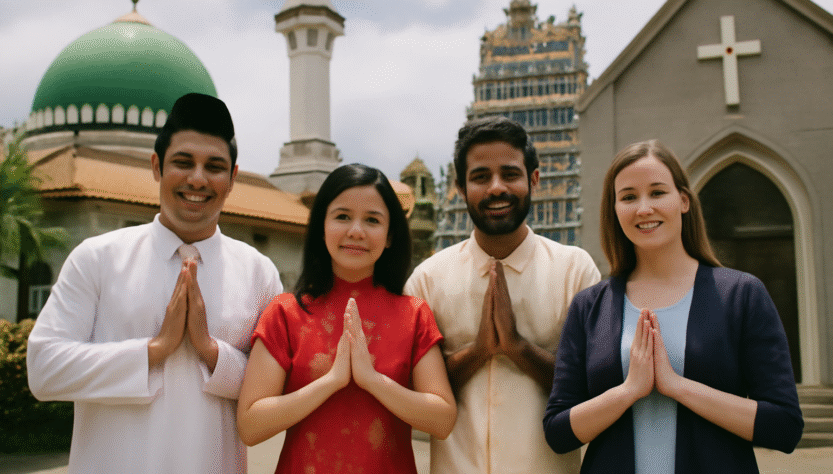
Religious diversity in Malaysia is one of the defining characteristics of the nation. With a population that practices Islam, Buddhism, Hinduism, Christianity, and other religions, Malaysia is an exemplary model of how different religions can coexist peacefully and harmoniously. In this article, we will explore how religious diversity contributes to Malaysia’s social harmony.
As a predominantly Muslim country, Malaysia honors and celebrates Islamic practices, particularly through the observance of Ramadan and Hari Raya Aidilfitri. However, Malaysia is also home to many non-Muslim religious communities, including Buddhists, Hindus, and Christians. For the Chinese community, the celebration of Chinese New Year is an important occasion, while the Hindu community celebrates Deepavali with festivals of lights.
The government of Malaysia has firmly committed to upholding religious freedom, enshrined in the constitution. This commitment is reflected in the fact that places of worship for different religions — mosques, temples, and churches — can often be found side by side, symbolizing the peaceful coexistence of multiple faiths.
Religious diversity is also evident in daily life, where halal and non-halal foods are sold side by side, and religious festivals are celebrated together. Malaysians of different faiths often join in each other’s celebrations, showing mutual respect and understanding for the practices of others. This harmony is a testament to the ability of Malaysians to live peacefully together, despite their different religious backgrounds.
In conclusion, Malaysia’s religious diversity is an essential part of its national identity. The respect and tolerance shown by different religious groups help create a society that values peace and cooperation.