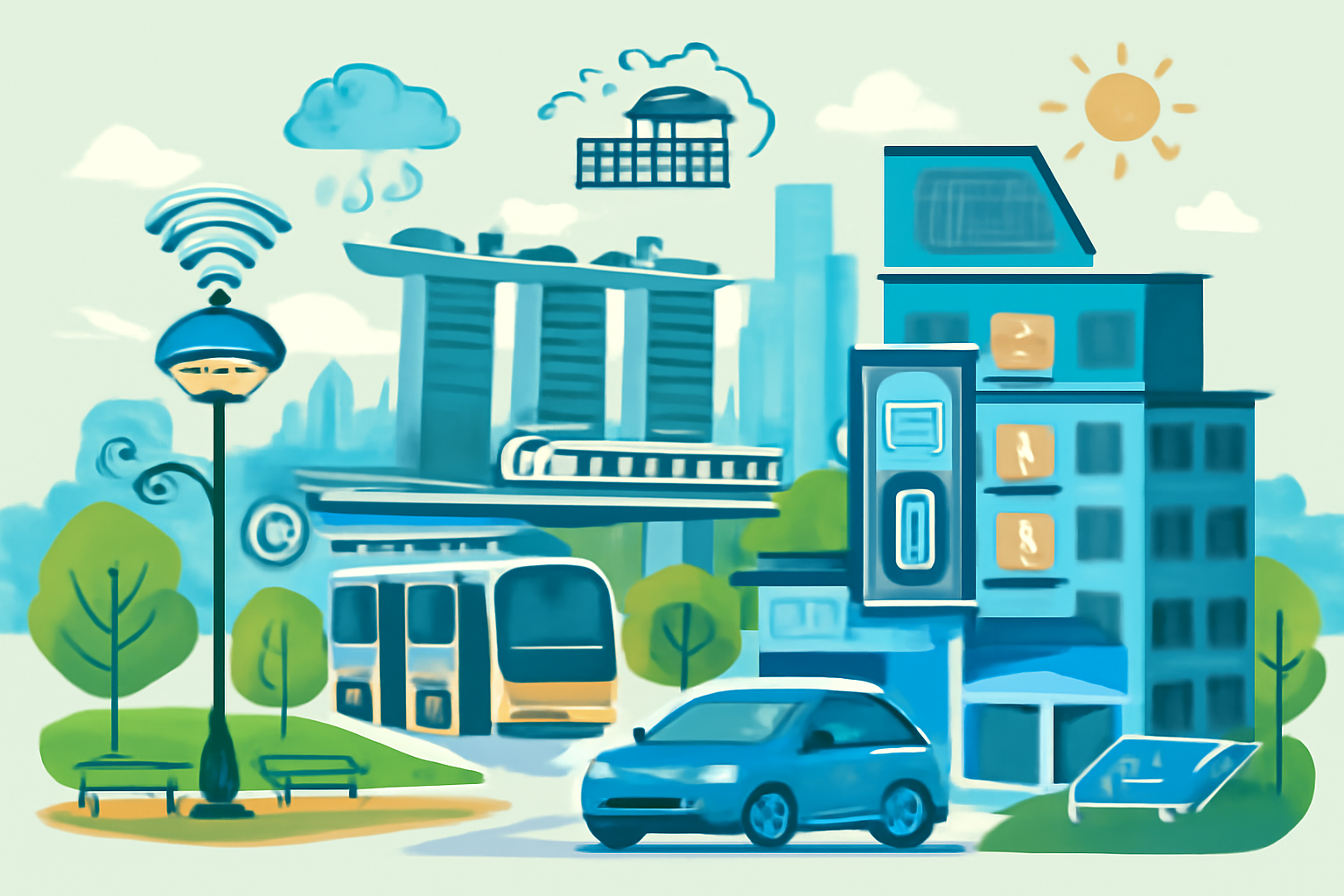
Singapore’s ambition to become a smart city has revolutionized how its citizens live, work, and interact with their environment. By embracing cutting-edge technologies, the city has optimized its infrastructure and services to improve efficiency, sustainability, and quality of life. From intelligent transportation systems to sustainable building practices, Singapore’s innovative approach serves as a blueprint for other cities aiming to leverage technology for urban development.
The backbone of Singapore’s smart city strategy is its use of data and sensor technologies. With an extensive network of sensors embedded throughout the city, Singapore collects vast amounts of real-time data on everything from traffic congestion to air quality. This data is processed to guide decision-making and improve the delivery of public services. For instance, data-driven traffic management systems adjust signal timings to optimize traffic flow, reducing delays and lowering emissions.
The transportation system in Singapore is a prime example of how technology can enhance urban mobility. Public transit services such as the MRT and buses are equipped with smart systems that provide live updates on schedules and routes. These systems allow commuters to plan their journeys more efficiently and reduce waiting times. Additionally, the city has implemented cashless and contactless payment solutions, making it easier for people to travel without needing physical tickets or cards.
In terms of residential living, Singapore’s embrace of smart home technologies has transformed the way people interact with their homes. Many new residential developments are equipped with IoT devices, allowing residents to control lighting, security systems, and even climate control from their mobile devices. This offers both convenience and energy efficiency, as these devices can be programmed to adjust settings automatically based on usage patterns.
Sustainability is a key driver in Singapore’s smart city initiatives. The city is making strides in renewable energy adoption, particularly through the installation of solar panels on rooftops. Additionally, smart grids are used to monitor and optimize energy usage across the city, ensuring that power is distributed efficiently. These efforts contribute to Singapore’s overall goal of reducing its environmental impact while improving the city’s resilience to climate change.
Finally, technology has also transformed Singapore’s public spaces. Parks, gardens, and recreational areas are equipped with sensors that monitor environmental conditions, such as air quality and temperature. This real-time data is shared with the public, allowing residents to make informed decisions about outdoor activities and promoting a healthier lifestyle.
In conclusion, Singapore’s approach to becoming a smart city showcases the transformative power of technology in urban development. By leveraging data, improving transportation, promoting sustainability, and enhancing the use of public spaces, the city is setting a global standard for how technology can improve the quality of life in urban environments.