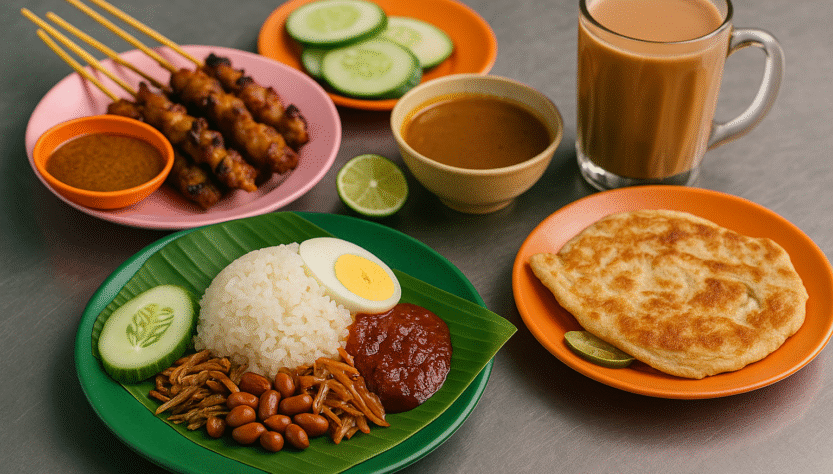
Festive food in Malaysia is a social script: it marks time, honors community, and turns homes into open houses. While daily meals prioritize variety and convenience, celebration menus preserve technique, symbolism, and generosity.
Hari Raya Aidilfitri centers on abundance after Ramadan’s restraint. Ketupat—rice compacted in woven palm pouches—and lemang—glutinous rice cooked in bamboo with coconut milk—form the starchy backbone. They pair with rendang (slow-cooked meat), kuah lodeh (vegetable coconut stew), and serunding (spiced meat floss). Cookies (kuih raya) like pineapple tarts, kuih makmur, and bangkit exemplify delicate textures and buttery fragrance. Ramadan bazaars leading up to the holiday offer bubur lambuk, murtabak, and a kaleidoscope of drinks—practice rounds for the feast to come.
Chinese New Year emphasizes prosperity and harmony. Families toss yee sang, a raw-fish salad with shredded vegetables, crackers, and sweet-sour plum sauce—everyone lifts chopsticks high, chanting wishes as the salad becomes aerated and celebratory. Traditional sweets include nian gao (kuih bakul), peanut cookies, and love letters (kuih kapit). Savories range from poached chicken to steamed fish symbolizing surplus. In multicultural settings, halal adaptations preserve meaning while respecting dietary needs.
Deepavali brings lamps, color, and a spectrum of spices. Banana leaf feasts showcase vegetarian curries, rasam, pickles, and crunchy papadum; sweets and snacks like laddoo, mysore pak, and murukku fill tins for visiting friends. Mamak restaurants add biryani and tandoori to the mix, underlining how Indian flavors have embedded themselves in Malaysia’s mainstream palate.
East Malaysian harvest festivals—Kaamatan in Sabah and Gawai in Sarawak—celebrate rice, community, and gratitude. Dishes might include manok pansoh (chicken steamed in bamboo with herbs), pansuh fish, and local greens, with tuhau, bambangan, and wild fern (pucuk paku) adding forest notes. Traditional beverages like tapai and tuak appear in non-Muslim contexts, while communal grilling and dancing create a sense of shared heritage.
Weddings and life-cycle events further expand the festive lexicon. Nasi minyak (ghee-scented rice), ayam masak merah (tomato-chili chicken), acar (pickled vegetables), dalca, and whole roasted meats highlight generosity and technique. Even the way food is served signals inclusion: open houses invite neighbors regardless of ethnicity or faith, and the expectation is simple—eat, talk, and take seconds.
These rituals show how food safeguards identity while welcoming change. A new oven might replace a charcoal stove; a halal-certified yeast might enter a bakery recipe. But the core values—balance, abundance, hospitality—remain intact. In Malaysia, celebration tastes like coconut smoke, tamarind brightness, and the warmth of a crowded table.