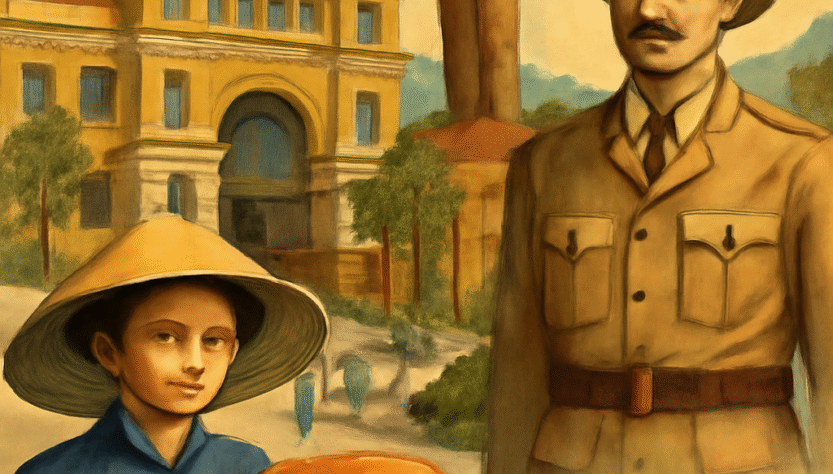
The colonial period in Vietnam, lasting from the mid-1800s until the 1950s, was a pivotal chapter in the country’s history. France’s colonization of Vietnam, as part of its Indochinese empire, brought about significant changes in the political, economic, and cultural fabric of the nation. While French rule was characterized by exploitation and resistance, it also left lasting influences that continue to shape Vietnam today.
Politically, the French established a centralized colonial administration that undermined the power of the Vietnamese monarchy and imposed direct French control over the region. The French took control of the economy, exploiting Vietnam’s rich natural resources for their benefit. Rubber plantations, rice production, and mining operations were all geared toward supporting the French economy, and local workers were often subjected to poor conditions and forced labor.
The French also introduced new forms of education and governance. They built schools that taught French, making it the language of administration and intellectual life. French-style legal systems were implemented, and the Vietnamese elite, educated in French institutions, began to play a significant role in the colonial administration. This educational and linguistic influence helped create a class of French-speaking Vietnamese who were aligned with colonial interests.
The cultural impact of French rule is especially evident in Vietnam’s architecture, food, and daily life. French colonial architecture can still be seen in Vietnam’s cities, with grand buildings, wide streets, and large public spaces. The architectural style blended European designs with local elements, leaving a lasting imprint on the urban landscape. In Hanoi and Ho Chi Minh City, iconic colonial buildings like the Hanoi Opera House and the Ho Chi Minh City Post Office continue to attract tourists.
French cuisine, particularly bread, pastries, and coffee, also became integral to Vietnamese food culture. The “banh mi,” a sandwich that combines French bread with traditional Vietnamese fillings, is a popular street food that symbolizes the fusion of French and Vietnamese culinary traditions. The French also introduced coffee to Vietnam, and the Vietnamese adaptation, “cà phê sữa đá,” made with sweetened condensed milk, has become a beloved national drink.
The economic exploitation and harsh treatment of the Vietnamese population under French rule led to significant resistance movements. Nationalist leaders, including Ho Chi Minh, fought for Vietnamese independence, and the First Indochina War ultimately led to the French withdrawal from Vietnam in 1954. The Battle of Dien Bien Phu, in which Vietnamese forces decisively defeated the French, marked the end of colonial rule.
While the French colonial legacy is often viewed through the lens of exploitation, it is also recognized for its cultural contributions. The architectural style, culinary influence, and the introduction of new educational and legal systems have all left a lasting impact on Vietnamese society.