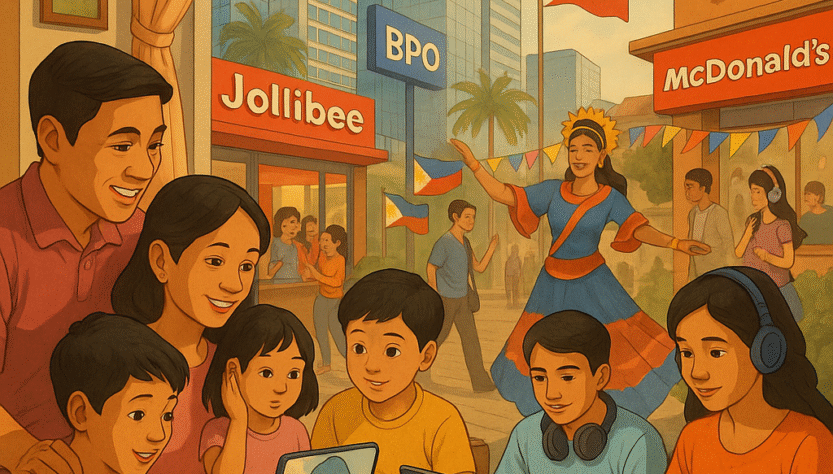
One of the clearest windows into globalization in the Philippines is the media environment. Television, radio, streaming platforms, and social networks expose Filipinos to content from nearly every corner of the world. People watch Latin American telenovelas, Korean dramas, Japanese anime, and American reality shows, often in the same week. This mix of influences shapes tastes, humor, and storytelling preferences, influencing not only entertainment choices but also how people interpret their own lives.
Language use reflects this intense cultural mixing. Conversations in cities frequently blend English, Filipino, and regional languages, sprinkled with slang picked up from foreign shows and online communities. Taglish and other hybrid forms are commonplace, especially among young people. This linguistic flexibility helps Filipinos navigate both local and global spaces, making it easier to work with foreign clients or consume international media. However, some worry that the dominance of English and Filipino might weaken smaller local languages over time.
Advertising and branding further demonstrate the power of global culture. Shopping districts and digital spaces are full of campaigns featuring Western and Korean models, foreign lifestyles, and international celebrities. Products are marketed using global buzzwords like “premium,” “organic,” or “influencer-approved.” These messages often define what is considered stylish, modern, or successful, shaping how people dress, decorate their homes, and even plan their vacations. Local businesses respond by adopting similar strategies, sometimes blending Filipino cultural elements with global marketing styles.
The news media environment has also changed. International news channels, global websites, and social media feeds make foreign events as visible as local ones. A disaster in another country, a global health scare, or an international protest movement can quickly become part of everyday conversation in Philippine households. This broader awareness encourages people to see their own struggles in connection with global issues like climate change, migration, and economic inequality. At the same time, the flood of information makes it harder to distinguish reliable sources from disinformation.
Creative industries in the Philippines actively engage with this global context. Musicians collaborate with foreign artists, filmmakers submit their work to international festivals, and writers publish online for worldwide audiences. Everyday users also become creators, posting vlogs, fan fiction, and dance covers inspired by global trends. These activities allow Filipinos to contribute to global culture rather than just consume it. However, competition for visibility is intense, and algorithms on major platforms can favor content from wealthier countries.
Even traditional cultural practices are influenced by global media. Weddings, birthdays, and graduations are often planned with inspiration from foreign films or celebrity events seen online. At the same time, there is increased interest in showcasing Filipino heritage—traditional clothing, indigenous music, and local cuisine—on social platforms. People proudly share photos and stories about their roots while using global tools and aesthetics. This ongoing blending of influences makes everyday life in the Philippines a dynamic site of cultural negotiation, where global currents and local creativity constantly interact.