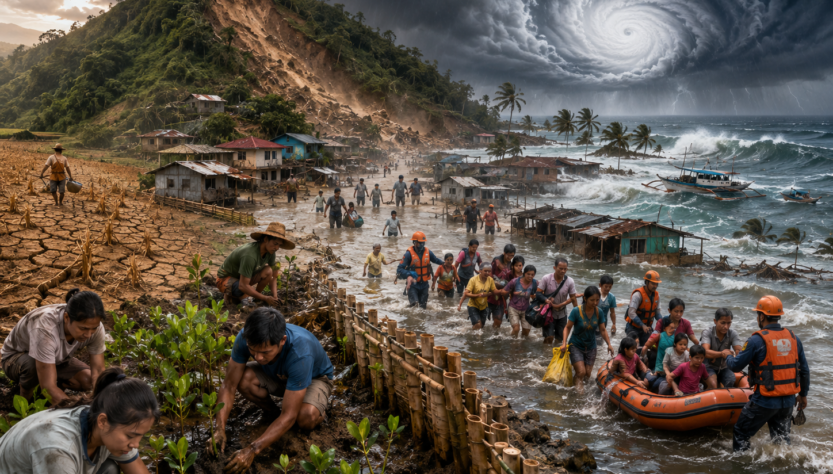
The Philippines is one of the countries most vulnerable to climate change, due to its location in the typhoon belt and along the Pacific Ring of Fire. Its islands and coastal zones face recurring natural hazards, including typhoons, floods, landslides, and coastal erosion. Climate change has intensified these events, creating higher risks for communities, infrastructure, and the national economy.
Typhoons are a significant threat, with an average of 20 storms entering the Philippines annually. Climate change contributes to stronger winds and heavier rainfall, resulting in severe flooding, landslides, and property damage. Low-lying coastal areas are particularly at risk from storm surges, which can destroy homes and disrupt local economies. Riverine and mountainous regions are also affected, with landslides blocking roads and isolating communities.
Agricultural production is impacted by unpredictable weather patterns. Droughts and irregular rainfall cycles reduce yields for rice, corn, and coconut, threatening food security and income for millions of smallholder farmers. These challenges highlight the socio-economic consequences of climate change, particularly for vulnerable populations with limited resources.
The government has taken steps to strengthen disaster preparedness and climate adaptation. Agencies like the NDRRMC implement early warning systems, evacuation plans, and emergency response protocols. Investments in climate-resilient infrastructure, such as flood protection measures and reinforced buildings, aim to reduce damage during extreme events. Local governments promote disaster risk reduction at the community level, training citizens in emergency response and environmental stewardship.
Community engagement is a key factor in building resilience. Citizens participate in mangrove restoration, coastal cleanups, and emergency preparedness drills. NGOs provide support through education, technical assistance, and resource mobilization, ensuring that vulnerable communities have the knowledge and tools to respond effectively.
International cooperation supports the Philippines’ adaptation efforts. Global organizations provide funding, technological solutions, and knowledge-sharing initiatives that enhance disaster management and climate adaptation. These partnerships help the country adopt climate-smart practices, strengthen infrastructure, and improve response systems to better handle increasing climate risks.
Effectively managing climate-related hazards requires coordinated efforts across government agencies, communities, and international partners. By enhancing resilience, protecting ecosystems, and preparing populations for disasters, the Philippines can mitigate the impact of climate change and safeguard both people and economic development.