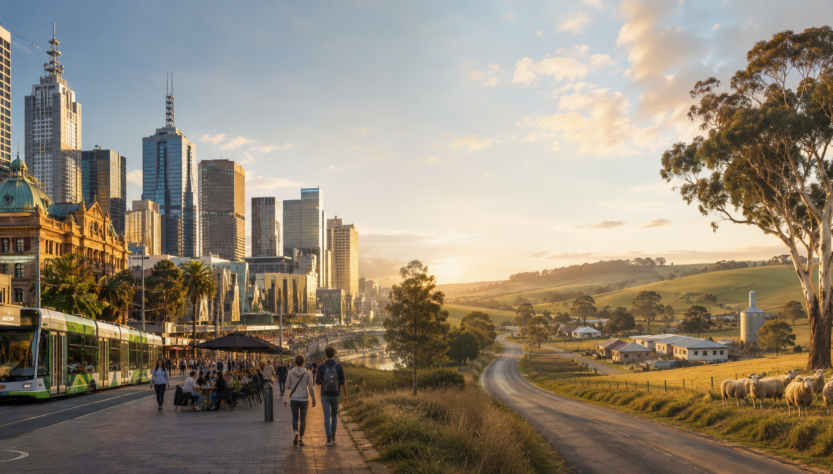
Australia contains two strongly contrasting living environments: densely populated cities and widely spread rural communities. These differences shape how Australians experience employment, education, transport, social life, and access to essential services. While both settings share the same national identity, their daily realities are quite distinct.
Urban Australia is built around infrastructure and opportunity. Cities such as Sydney, Melbourne, Brisbane, Perth, and Adelaide are home to millions of people and serve as economic and cultural hubs. The concentration of services in these areas means residents can access healthcare, education, entertainment, and employment within relatively short distances.
The lifestyle in cities is often dynamic and fast-paced. Public transport systems support mobility, and many people commute daily between suburbs and central business districts. Cities also provide a wide range of cultural experiences, including museums, concerts, sporting events, and international cuisine. This diversity attracts both locals and newcomers from around the world.
Despite these advantages, urban living can feel demanding. The cost of housing is a major issue, with limited affordability in many suburbs. Apartments and shared housing are common, especially among younger residents. Noise levels, traffic congestion, and busy schedules can also contribute to stress.
Rural Australia offers a very different environment. Towns and regional areas are generally more spread out, with smaller populations and a closer connection to nature. Residents often experience quieter surroundings, larger properties, and more open space. Outdoor living is a central part of daily life.
Social structure in rural areas is often tightly connected. People tend to know their neighbors and participate in community-based activities. Schools, sporting clubs, and local events play a major role in maintaining social cohesion. This can create a strong sense of trust and familiarity within communities.
Economically, rural regions depend heavily on primary industries. Farming, livestock production, mining, and tourism are key contributors. These industries provide employment but can also be sensitive to environmental conditions such as droughts, floods, and seasonal changes.
Access to services remains one of the biggest challenges in rural areas. Healthcare facilities may be limited, and specialized treatment often requires travel to larger cities. Educational opportunities beyond high school may also be less accessible, prompting relocation for study or work.
The relationship between urban and rural Australia continues to evolve. Improved technology, infrastructure investment, and remote work opportunities are gradually changing traditional patterns of migration and employment. Some people now choose regional living while maintaining urban careers.
Both environments offer valuable but different lifestyles. Cities provide convenience, variety, and professional growth. Rural areas provide space, community connection, and a slower pace. The choice between them depends on personal priorities and life goals.