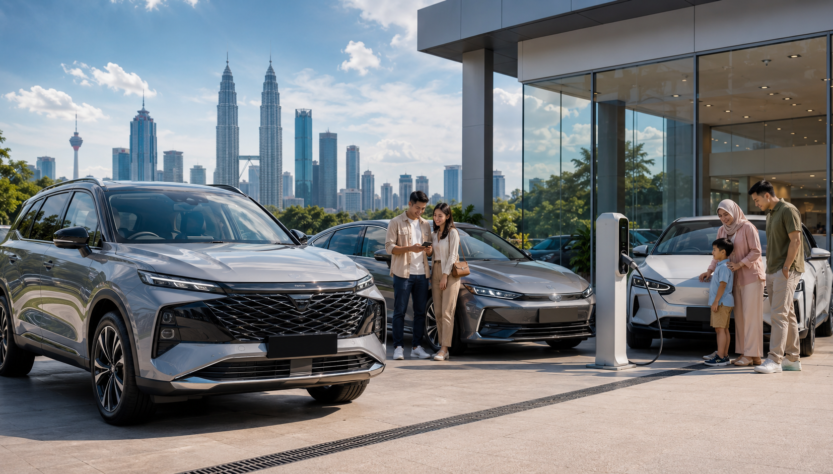
Malaysia’s automotive industry is entering a new era where traditional manufacturing capabilities are being combined with advanced technology, global investment, and sustainable mobility solutions. Once recognized mainly as a producer of national vehicles, Malaysia is now working to strengthen its position as an important automotive hub within Southeast Asia.
The country’s automotive development is supported by decades of manufacturing experience, a strong supplier ecosystem, skilled human resources, and strategic government initiatives. As global automotive companies restructure their supply chains and accelerate the transition toward electric vehicles, Malaysia has an opportunity to attract new investment and expand its role in the regional automotive landscape.
The country’s ability to combine vehicle production with electronics, semiconductor expertise, and digital technology could become a major advantage in the future automotive economy.
Industry performance and automotive market developments are tracked by the Malaysian Automotive Association (MAA):
https://www.maa.org.my/
Malaysia’s Automotive Position in the ASEAN Market
Southeast Asia has become one of the world’s most important automotive regions due to its growing consumer market, manufacturing capabilities, and investment potential.
Countries such as Thailand and Indonesia have traditionally dominated regional vehicle production, but Malaysia has developed a unique position through its national automotive brands and technology-focused manufacturing ecosystem.
Malaysia’s automotive advantages include:
- Established vehicle assembly capabilities
- Experienced automotive suppliers
- Strong electronics manufacturing sector
- Strategic location in Southeast Asia
- Skilled engineering workforce
These factors make Malaysia attractive for companies looking to establish regional production and technology operations.
Rather than competing only through production volume, Malaysia is increasingly focusing on higher-value automotive activities involving innovation, engineering, and advanced manufacturing.
The Importance of Foreign Investment in Automotive Development
Foreign investment has played a significant role in strengthening Malaysia’s automotive industry.
International automotive companies have contributed through:
- Manufacturing facilities
- Technology transfer
- Workforce development
- Supply chain expansion
- Research and engineering collaboration
Global brands such as Toyota, Honda, BMW, Mercedes-Benz, and other automotive companies have established operations in Malaysia, creating stronger connections between local suppliers and international automotive networks.
As the industry moves toward electrification, attracting investment in battery technology, electric vehicle production, and automotive electronics has become increasingly important.
Malaysia’s experience in semiconductor and electrical component manufacturing provides additional opportunities because future vehicles require significantly more electronic systems than conventional cars.
Electric Vehicles Create New Growth Opportunities
The global transition toward electric mobility is reshaping the automotive industry, and Malaysia is positioning itself to participate in this transformation.
Electric vehicles require a different industrial ecosystem involving:
- Battery manufacturing
- Power electronics
- Charging infrastructure
- Software development
- Advanced vehicle systems
Malaysia’s existing industrial capabilities provide a foundation for developing these areas.
The country’s automotive sector can benefit from combining traditional vehicle manufacturing knowledge with its established electronics industry.
This creates opportunities not only for producing electric vehicles but also for becoming part of the wider EV supply chain.
Government policies supporting industrial transformation and sustainable technology development are available through MITI:
Advanced Manufacturing Strengthens Malaysia’s Automotive Competitiveness
Modern automotive production is increasingly dependent on smart manufacturing technologies.
Manufacturers are adopting Industry 4.0 systems to improve efficiency and quality through:
- Robotics
- Artificial intelligence
- Automated inspection systems
- Digital production monitoring
- Data analytics
For Malaysia, investing in smart manufacturing is essential to compete with countries that have already developed advanced automotive production capabilities.
Technology adoption also helps local suppliers meet international quality standards and participate in global automotive supply networks.
The future automotive industry will not only reward countries that produce more vehicles but also those that can produce smarter, more technologically advanced vehicles.
Challenges in Becoming a Leading Automotive Hub
Although Malaysia has strong advantages, several challenges must be addressed to strengthen its regional position.
The first challenge is increasing competition from neighboring countries. Thailand has a strong international automotive manufacturing base, while Indonesia has attracted major investment due to its large domestic market and battery resources.
Malaysia must continue improving:
- Research and development capability
- EV infrastructure
- Local technology innovation
- Skilled workforce availability
- Automotive software expertise
The next generation of automotive competitiveness will depend heavily on innovation rather than only manufacturing capacity.
Malaysia’s Future Role in Global Automotive Transformation
Malaysia has the opportunity to become more than a vehicle production center. The country can develop into a comprehensive mobility ecosystem combining manufacturing, technology, sustainability, and digital innovation.
The future automotive landscape will likely involve closer integration between vehicles, artificial intelligence, renewable energy, and connected transportation systems.
Malaysia’s automotive journey demonstrates how a country can transform from developing national vehicle production into building a modern mobility industry.
By strengthening partnerships, encouraging innovation, and investing in future technologies, Malaysia can continue expanding its influence in ASEAN’s automotive sector.