Movement Driven by Global Economic Forces
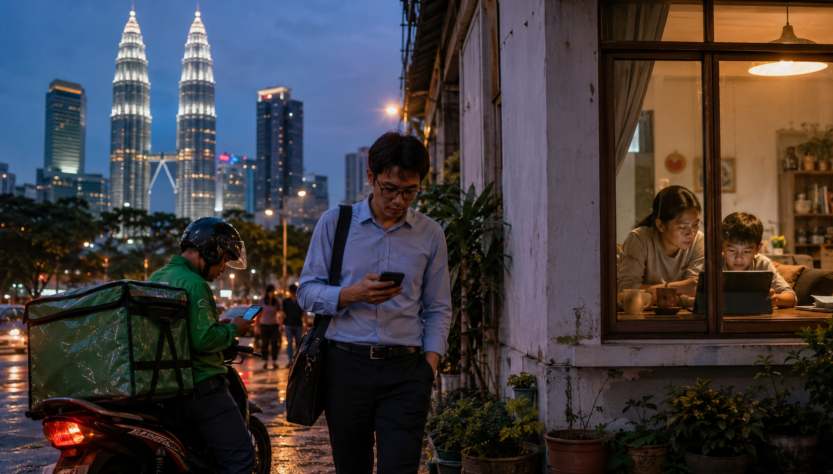
Malaysia’s urbanisation trend is closely linked to globalisation. Economic activity is concentrated in urban hubs where multinational companies, industrial zones, and service industries operate. This concentration draws people from rural areas seeking education, employment, and improved living standards.
World Bank development indicators highlight Malaysia’s steady urban population growth: https://data.worldbank.org/country/malaysia
The Expansion of Urban Living
Cities such as Kuala Lumpur, Penang, and Johor Bahru have expanded rapidly, creating suburban zones and satellite towns. Housing developments, transport infrastructure, and commercial centres have reshaped the physical and social landscape.
However, rapid urban growth has also led to rising property prices. Many young Malaysians find it difficult to afford housing close to economic centres, forcing them to live farther away and commute longer distances.
Kampung-to-City Migration Patterns
Rural-to-urban migration often begins with education pathways. Students leave villages to attend universities in cities and subsequently remain in urban employment markets. Over time, rural ties are maintained through periodic visits and financial remittances rather than daily interaction.
This shift transforms the concept of family proximity. Emotional connections remain strong, but physical communities become more dispersed.
Case Insight: Housing Pressure in Greater Klang Valley
In the Klang Valley, housing affordability has become a major social concern. Middle-income earners increasingly rent rather than purchase homes. High-rise apartments dominate the skyline, reflecting both population density and land scarcity.
Long commuting times from peripheral areas such as Rawang, Seremban, and Kajang illustrate the spatial consequences of urban expansion.
Rural Transformation Under Globalisation
Rural areas are not static. Digital connectivity enables rural entrepreneurs to sell products online, promote tourism, and engage in remote work. However, limited infrastructure and youth migration weaken long-term local economic sustainability.
Agriculture is also increasingly mechanised and integrated into global supply chains, reducing labour demand but improving productivity.
Social Identity Between Two Spaces
Many Malaysians now maintain dual identities: urban economic life and rural cultural heritage. Festivals, family gatherings, and traditional practices continue to anchor identity, even as daily life becomes urban-centric.