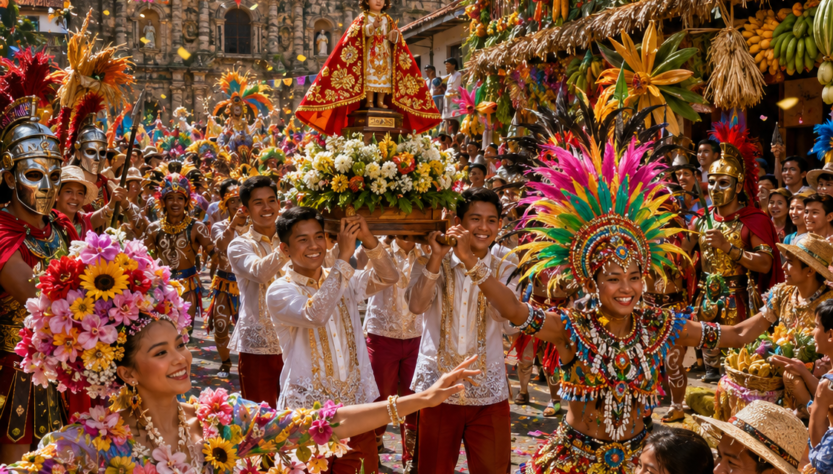
Filipino festivals and traditions provide a meaningful window into the country’s cultural soul. Spread across thousands of islands, these celebrations vary by region but share common themes of gratitude, devotion, unity, and artistic expression. Influenced by a mix of indigenous beliefs and foreign traditions, Philippine culture has developed into a dynamic and colorful system of rituals and festivities.
Many festivals are centered on Catholic devotion, reflecting the country’s colonial history. The Sinulog Festival in Cebu is among the most significant, drawing millions of participants each year. It honors the Santo Niño through processions, street dancing, and religious ceremonies. The dance itself, with its repetitive forward and backward motion, symbolizes both prayer and historical continuity. In Aklan, the Ati-Atihan Festival similarly honors the Santo Niño but also recognizes the Ati people, highlighting the blending of indigenous and Christian traditions.
The Dinagyang Festival in Iloilo is another major cultural event. It features highly organized performances where dance groups compete in storytelling through movement, music, and costume design. The festival demonstrates how tradition can evolve into a modern cultural spectacle while maintaining religious roots.
Agricultural traditions also play a key role in Philippine festivals. The Pahiyas Festival in Lucban, Quezon, is a thanksgiving celebration for a good harvest. Residents decorate their homes with agricultural products such as rice, vegetables, and fruits, transforming the town into a vibrant artistic space. Similarly, the Panagbenga Festival in Baguio celebrates flowers and the city’s cool climate. Giant floral floats and street dancing highlight the region’s natural beauty and artistic creativity.
In Davao, the Kadayawan Festival celebrates abundance and cultural diversity. It honors the land’s natural resources and recognizes the traditions of indigenous communities. The festival includes tribal performances, floral displays, and cultural exhibitions, showcasing the harmony between nature and people.
Some festivals reflect historical resilience. The MassKara Festival in Bacolod emerged during a time of crisis but evolved into a celebration of joy and perseverance. The smiling masks worn by performers symbolize hope and emotional strength despite hardship.
Filipino traditions extend into daily life. Respect for elders is shown through polite gestures and language. Hospitality is deeply rooted in culture, with guests often treated as part of the family. The value of “bayanihan” encourages communal cooperation, especially during times of need.
Together, these festivals and traditions reveal a culture that is expressive, resilient, and deeply connected to community values.